For several years, I have been driven by a question: given the excellence of acoustic reproduction systems, combining impeccable sound quality and dynamics, would it be possible to achieve completely satisfactory results with entry-level equipment that is accessible to as many people as possible?
On this site, I will prove to you that it is possible!
Here's a simple observation: can you really tell the difference between music played from MP3, WAV, or FLAC files? Apart from subtle nuances that are highly dependent on the listening context, the answer is often no. This observation can be extended to sound reproduction equipment. Between a very high-end turntable, installed on a granite base and surrounded by complex technical equipment, and the playback of a good-quality MP3 file via a properly configured computer, the perceived difference in sound quality does not necessarily justify the considerable price difference.
In other words, beyond a certain level of quality, increasing financial investment does not always lead to a proportional improvement in the listening experience. The differences then become marginal, subjective, and strongly influenced by listening conditions, listener expectations, and the accompanying audiophile discourse. Why low cost? ?
When we look at the current prices of hi-fi equipment, we see that even the most basic components are very expensive. Manufacturers systematically justify these costs by citing listening quality, but this claim needs to be qualified. In fact, it is entirely possible to purchase a system for around a hundred euros that offers perfectly satisfactory sound reproduction, dynamics, and power. How is such value for money possible?
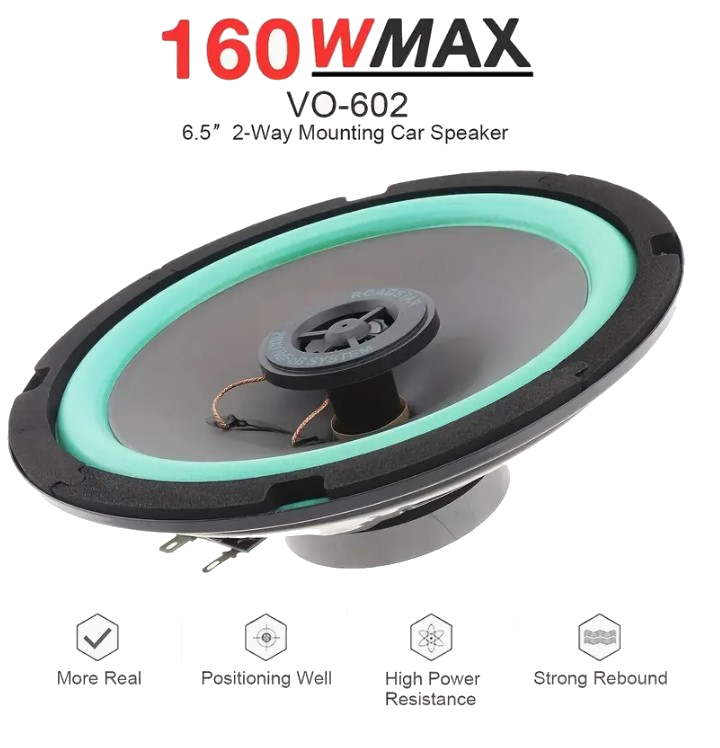
I analyzed each link in the acoustic chain in order to optimize the value for money for each one. You will see from my choices that I have favored a Chinese supplier for the electronic components (connectors, resistors, amplifier, speaker), whose products offer, in my opinion, an excellent compromise between quality and price. ("Let's be clear: nearly 70 to 90% of electronic equipment comes from China. However, some French retailers have no qualms about multiplying the prices of strictly identical products, making huge margins at the expense of consumers.")
In terms of calculations, I used empirical rules and basic, proven calculations as much as possible, without getting lost in a sea of equations and formulas reserved for purists and/or math enthusiasts!
For the cabinetry, I opted for Kronospan natural OSB panels (15-18 mm thick, 250 x 63 cm), which are particularly economical and easy to cut in the store. These panels can be used to assemble high quality speakers, while old fleece clothing, cut to size, provides effective sound insulation. Finally, even the glue you need can be made yourself for just a few Euros...
In short, it is entirely possible to combine performance with a reasonable budget, much to the delight of your wallet!